How Often Should You Service Your HVAC in St. George or Cedar City?
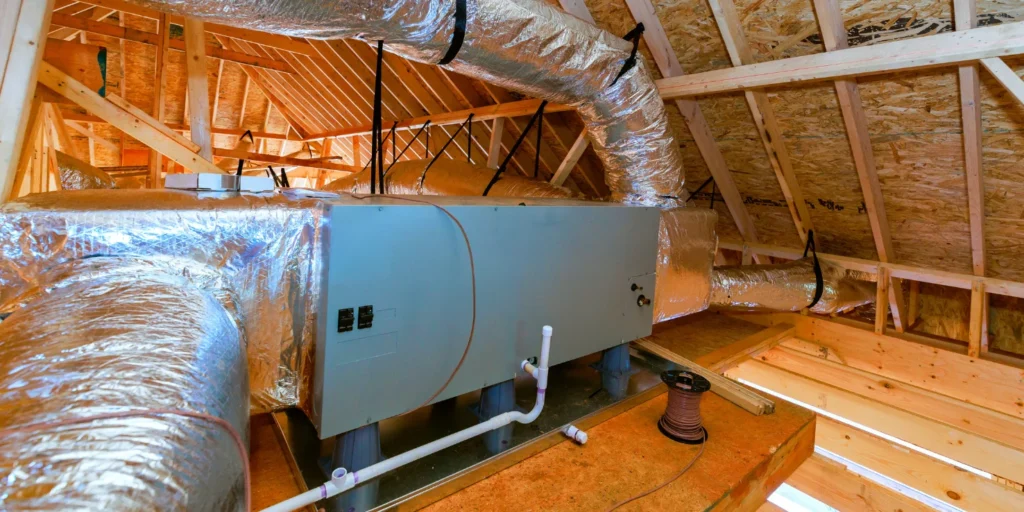
One of the most common questions we hear from Southern Utah homeowners is some version of this: how often do I actually need to have my HVAC system serviced? The packaging on your air filter says every 90 days. Your neighbor says once a year is fine. The HVAC company you called last time said every six months. Who is right?
The honest answer depends on where you live — and in St. George, Cedar City, and the rest of Southern Utah, the answer is more often than the national guidelines suggest.
The National Recommendation vs. What Southern Utah Actually Needs
Most HVAC manufacturers and industry guides recommend servicing your system once a year. That recommendation was written for average climates with moderate seasons. Southern Utah is not that.
Your AC runs nearly continuously from May through September — sometimes longer. Your furnace in Cedar City carries a real heating load through a real mountain winter. The cumulative run time your system logs in a year in Southern Utah is significantly higher than what the national averages assume. More run time means more wear, more filter loading, and more opportunity for small issues to develop into larger ones.
For Southern Utah homes, twice a year is the right cadence: once in spring before the cooling season, and once in fall before the heating season.
The Spring Visit: Your AC Before Summer Hits
The spring visit is the most critical one for most Washington County homeowners. Scheduling it in April — before the heat arrives — gives you time to address anything the technician finds before your system is running at full capacity on a 110-degree day.
A proper spring AC tune-up covers the components most likely to cause failures during the cooling season:
Inspecting and cleaning the outdoor condenser coils, which accumulate dust and debris over the winter
Checking refrigerant levels and looking for leaks
Testing capacitors and contactors — the electrical components most commonly responsible for summer failures
Cleaning or replacing the air filter
Verifying thermostat calibration and overall system operation
Checking ductwork connections for leaks that reduce efficiency
Capacitor failure is one of the most common causes of AC breakdowns on hot summer days. It is also one of the cheapest repairs when caught during a tune-up. Left unaddressed, a weakening capacitor causes the compressor to work harder to start, which shortens the compressor’s life significantly. Finding it in April costs far less than finding it in July when you are without AC and every HVAC company in Washington County is booked out.
The Fall Visit: Your Furnace Before Winter Sets In
The fall visit matters most for Cedar City homeowners and anyone in the higher-elevation parts of Washington County where winters are genuine. Scheduling it in September or October gives you a comfortable buffer before you actually need the heat.
A furnace tune-up before winter covers the components that affect both performance and safety:
Inspecting the heat exchanger for cracks — a cracked heat exchanger is a carbon monoxide risk and warrants immediate attention
Cleaning burners and testing the ignition system
Testing safety switches and carbon monoxide levels
Cleaning or replacing the air filter
Checking thermostat operation and calibration
Inspecting the flue and venting for blockages
Cedar City furnaces work hard. Elevation winters are not the same as St. George winters, and a furnace that starts the heating season with a dirty heat exchanger, weak igniter, or partially blocked flue is a furnace that will either fail during the coldest stretch of the year or present a safety risk. Neither outcome is acceptable.
What About Air Filters Specifically?
Air filter replacement deserves its own mention because it is the one maintenance task homeowners can and should handle themselves between professional visits — and in Southern Utah, the standard guidance is not enough.
Most filter packaging says to replace every 60 to 90 days. In Southern Utah’s dusty desert environment, 30 to 45 days is more realistic during high-use seasons. The red desert dust that is common across Washington County is extremely fine and loads filters quickly. A clogged filter restricts airflow, forces the system to work harder, reduces efficiency, and accelerates wear on the blower motor.
Check your filter monthly. If it looks gray and loaded, replace it regardless of how long it has been in. This is the lowest-cost maintenance task with one of the highest returns in terms of system longevity.
Signs Your System Needs Attention Between Scheduled Visits
Even with twice-yearly service, there are things to watch for that indicate your system needs attention before the next scheduled visit:
Your energy bills are noticeably higher than the same period last year without a corresponding change in usage
The system is running longer cycles than usual to reach the set temperature
You hear new sounds — grinding, rattling, or clicking during startup or shutdown
Some rooms are significantly warmer or cooler than others
The system is cycling on and off more frequently than normal
There is visible moisture or condensation around the indoor unit
None of these are automatic emergencies, but all of them are worth a call. Catching a developing problem early is almost always cheaper than waiting until the system fails completely.
The Timing Matters as Much as the Frequency
Two visits a year is the right answer, but the timing of those visits matters too. Scheduling your AC tune-up in June instead of April means you are calling during peak season when availability is tight and you have less runway to address anything found before the heat is already here.
April for AC. September or October for furnace. Those windows give you the best combination of availability, lead time to address issues, and preparation before each season’s peak demand.
Ready to Get on a Schedule?
Utah Heritage HVAC offers a straightforward maintenance plan for Southern Utah homeowners. Two visits a year, one for your cooling system and one for your heating system, performed by the same technician who would show up for a repair. We know your equipment, we know this climate, and we will give you an honest report on what we find every time we are there.
Call or text us at 801-661-5412 to get on the schedule — or hit the button below to book online. We serve all of Washington County and Cedar City.